
- Call Us Today
- (941)505-7845
- Schedule Initial Consultation
Lakewood Ranch Trust Lawyer
Dedicated Trust Attorney in Lakewood Ranch, FL
Your address in Lakewood Ranch might be in Manatee County or Sarasota County, depending on where you live. That distinction can affect where a future probate proceeding is filed. A will alone does not keep your house out of probate, and neither a will nor a trust automatically overrides Florida’s homestead devise restrictions. An experienced Lakewood Ranch trust lawyer can address those concerns before they create problems for your family. Learn more about our comprehensive Lakewood Ranch estate planning services.
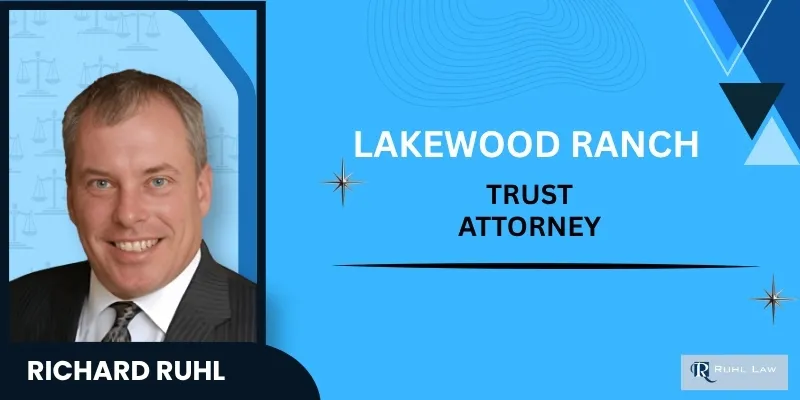
RUHL LAW, P.A. has spent more than 24 years representing Southwest Florida families through important legal matters, and we bring that same local experience and straightforward guidance to our trust and estate-planning practice. A dedicated Lakewood Ranch trust attorney can help you prepare a plan based on what you own, whom you want to protect, and how you want your property managed.
A properly funded trust may help qualifying assets pass outside probate. If probate administration becomes necessary, an experienced Lakewood Ranch probate lawyer can explain the applicable court process.
A short conversation is all it takes to start. Once you tell us what you own, we can explain whether a trust may be appropriate for your family and what the planning process would involve.
| 24+ Years Practicing Law in Southwest Florida | Offices in Sarasota & Port Charlotte | Bilingual: English & Spanish | 12th Judicial Circuit Familiarity |
Comprehensive Trust and Estate Documents for Lakewood Ranch Clients
Most Lakewood Ranch clients come to us needing more than a single document, and our estate-planning work covers the pieces that fit together into one plan.
- Revocable living trusts: Built to own and manage your home and other assets during your lifetime and potentially allow properly funded property to pass outside probate
- Pour-over wills: Directing probate assets left outside the trust into the trust after death, subject to the probate process
- Durable powers of attorney: Authorizing someone you choose to manage specified financial and property matters
- Health care surrogate designations: Naming someone to make authorized medical decisions if you cannot make them yourself
- Trust-funding and homestead-titling review: Determining which assets should be transferred to the trust and whether proposed titling could affect Florida homestead protections
We build each plan around what you own and whom you want protected, not a one-size-fits-all template.
What May Happen in Probate Without a Properly Funded Trust
Manatee and Sarasota Counties are both served by Florida’s Twelfth Judicial Circuit. The length of a formal probate administration depends on the estate, creditor issues, court requirements, tax matters, and whether anyone contests the will or another part of the proceeding.
During probate, the estate may incur court filing fees, publication expenses, professional fees, and other administrative costs. Certain probate records may also be available to the public. A bond may be required in some cases, although the will or court may waive or modify that requirement.
If you own a Lakewood Ranch homestead, Florida law adds another layer. A homestead cannot always be left to any beneficiary you choose when you are survived by a spouse or minor child, regardless of what a will or trust says.
A revocable trust, properly prepared and funded while you are alive, may allow assets titled in the trust to pass to your chosen beneficiaries without probate. Assets never transferred to the trust may still require probate administration.
How We Build Your Trust From the First Conversation to Signed Documents
We start with a straightforward inventory conversation:
- What you own
- Whom you want to inherit it
- Whom you trust to manage it if you cannot
From there, we prepare a revocable living trust and the supporting documents your plan requires. Those documents may include a pour-over will, durable power of attorney, health care surrogate designation, and living will.
Once the documents are ready, we walk through every page with you so nothing gets signed before you understand what it does.
The next step is funding. This may involve retitling appropriate real estate, financial accounts, or other property in the trust’s name and reviewing beneficiary designations. We help identify the assets that should be addressed because signing a trust does not automatically transfer property into it.
After signing and funding the trust, we recommend reviewing the plan periodically or sooner if you buy property, move, marry, divorce, welcome a child or grandchild, or experience another major family or financial change.
Why Lakewood Ranch’s Two-County Location Matters
Lakewood Ranch includes communities in both Manatee and Sarasota Counties. Both counties are part of the Twelfth Judicial Circuit, but probate proceedings are administered through the appropriate county.
Under Florida Statutes section 733.101, probate venue for a Florida resident is generally the county where the person was domiciled at death. The location of a particular asset is not necessarily the only factor that determines the correct county.
If you move from the Manatee County portion of Lakewood Ranch to the Sarasota County portion, or the other way around, the move ordinarily does not invalidate properly executed Florida estate-planning documents. However, it can affect domicile, future probate venue, property records, and the administration of your plan. We recommend reviewing your documents after a move so they reflect your current circumstances.
Two Florida Laws Every Lakewood Ranch Trust Should Address
Florida’s Trust Code allows flexibility in a revocable trust. Under Florida Statutes section 736.0602, a trust may generally be amended or revoked unless its terms expressly provide that it is irrevocable. The method used to amend or revoke the trust must comply with the trust terms and Florida law.
The more restrictive issue is Florida homestead. Under Florida Statutes section 732.4015, a homestead generally cannot be devised freely when the owner is survived by a spouse or minor child. If there is no minor child, the homestead may be devised to the surviving spouse. Transferring the property to a trust does not automatically avoid these restrictions.
These rules can affect how a trust is drafted, how a homestead is titled, and what happens after the owner’s death. Addressing them during planning can reduce the risk of an invalid provision or later dispute.
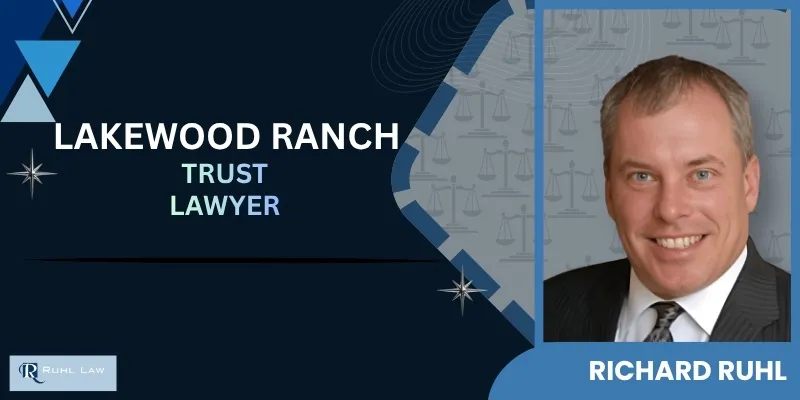
FAQs About Lakewood Ranch, FL Trust Law
Do I need a trust if I already have a will?
Not necessarily. A will controls probate assets and does not, by itself, keep those assets out of probate. A properly funded trust may allow qualifying assets to pass outside probate, but whether it adds meaningful value depends on your property, beneficiaries, family structure, and planning goals. We can review your current will and explain whether a trust may be useful.
How long does it take to establish a trust?
The timeline depends on the complexity of your assets, the provisions you need, how quickly information is provided, and whether property must be retitled. A plan involving real estate in multiple states, business interests, or specialized beneficiary provisions may take longer than a straightforward trust plan.
What does funding a trust mean, and why does it matter?
Funding means transferring appropriate assets into the trust or coordinating beneficiary designations with the plan. Merely signing a trust does not place your home, accounts, or other property into it. Assets left outside the trust may still require probate, which is why funding must be addressed as part of the planning process.
Can I change my trust later if my family situation changes?
Generally, yes, if the trust is revocable and you have the required legal capacity. Amendments and revocations must follow the method stated in the trust or another method permitted by Florida law. A review may be appropriate after a marriage, divorce, birth, death, relocation, or substantial financial change.
My home is in Manatee County, but part of Lakewood Ranch is in Sarasota County. Does that affect my estate plan?
It can affect domicile, probate venue, property records, and the administration of your estate. Moving between the two counties does not ordinarily invalidate properly executed Florida estate-planning documents, but the documents and related records should be reviewed so they reflect your current address, property, and circumstances.
What happens to my house if I do not have a trust and I am survived by my spouse?
The result depends on whether the home qualifies as Florida homestead, whether you have minor children or other descendants, how the property is titled, and whether a valid estate-planning document controls. Florida law restricts how homestead may be devised when an owner is survived by a spouse or minor child. A trust does not automatically override those restrictions.
What does it cost to establish a trust with your firm?
Cost depends on the documents required, the complexity of the trust provisions, and how your assets are owned. The firm can provide a specific fee after reviewing your circumstances and identifying the work your plan requires.
If your question is not listed here, contact us, and we will answer it directly instead of routing you to a general FAQ page.
Start Your Lakewood Ranch Trust With a Straightforward Conversation
You do not need to have every asset and account figured out before you reach out. Tell us what you own, whom you want to protect, and what concerns you most. We can explain what type of plan may fit your situation instead of offering a package built for someone else’s family.
Contact RUHL LAW, P.A. to schedule a consultation and discuss whether a Lakewood Ranch trust should be part of your estate plan.
Serving Lakewood Ranch and Southwest Florida
RUHL LAW, P.A. serves individuals and families in Lakewood Ranch and surrounding Southwest Florida communities from its Sarasota and Port Charlotte offices.
The firm helps clients prepare revocable living trusts, pour-over wills, powers of attorney, advance directives, and coordinated estate plans based on their property, beneficiaries, incapacity concerns, and long-term goals.
Because Lakewood Ranch extends into Manatee and Sarasota Counties, trust and probate questions may involve different county records and court offices. Probate venue for a Florida resident generally depends on the person’s domicile at death.
Get In Touch With Us
Fields Marked With An “ * ” Are Required
"*" indicates required fields
Available 24/7 Call (941)505-7845

© 2026 Ruhl Law, P.A. • All Rights Reserved.
Digital Marketing By 
*Images are obtained under license from Canva and other third-party stock image providers, with attribution included where required.