
- Call Us Today
- (941)505-7845
- Schedule Initial Consultation
Englewood Probate Lawyer
Dedicated Probate Attorney in Englewood, FL
Losing a family member brings grief, paperwork, inaccessible accounts, and questions about who is responsible for what happens next. A dedicated Englewood probate lawyer can determine whether the estate requires court administration and explain how Florida law affects the deceased person’s home, savings, debts, and personal property. Families who want to understand how probate relates to advance planning can also consult an experienced Englewood estate planning attorney.
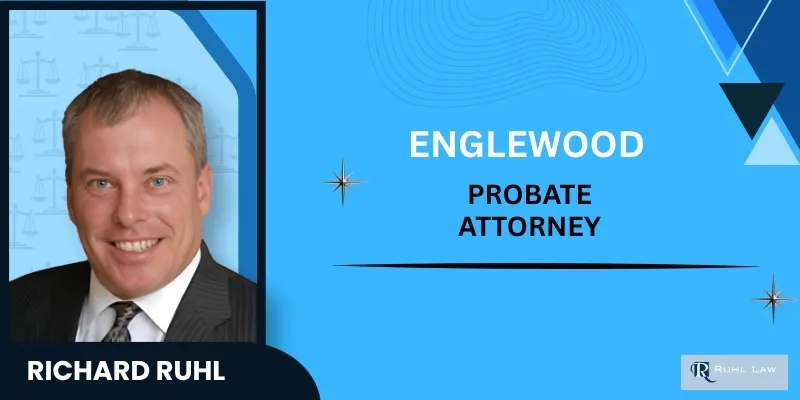
You do not have to navigate Florida’s probate requirements alone. An experienced Englewood probate attorney at Ruhl Law, P.A. can guide your family through the estate-administration process and help determine which assets are subject to probate.
Attorney Richard Ruhl has been licensed in Florida since 2002. He can review the estate and explain whether it may qualify for summary administration, require formal administration, involve an ancillary proceeding, or include assets that transfer outside probate.
Contact the firm to discuss what the deceased person owned, how those assets were titled, whether a valid will exists, and what your family should do next.
| Licensed in Florida Since 2002 | Port Charlotte and Sarasota Offices | Free Consultations Available |
Comprehensive Probate and Estate Matters We Handle in Englewood
Every family’s situation is different after a loved one dies. The appropriate procedure depends on the property subject to administration, whether a valid will exists, how long ago the death occurred, and whether beneficiaries or creditors dispute the estate.
We assist clients with:
- Formal administration: The court-supervised process generally used when an estate does not qualify for summary administration or requires the appointment of a personal representative.
- Summary administration: A potentially shorter process available when the estate satisfies Florida’s statutory requirements.
- Ancillary administration: A Florida proceeding that may be required when someone domiciled in another state dies owning Florida probate property.
- Will contests: Disputes involving a will’s validity, execution, capacity, fraud, duress, or undue influence.
- Personal-representative disputes: Proceedings involving the appointment, conduct, removal, or replacement of the person responsible for administering the estate.
- Intestate estates: Estates in which someone dies without a valid will and Florida law determines the beneficiaries.
- Creditor and beneficiary matters: Notice requirements, creditor claims, inventories, accountings, distributions, and objections.
Whether your family is trying to determine if probate is necessary or is already involved in a contested proceeding, a skilled probate lawyer serving Englewood can explain the applicable process and deadlines.
What Delayed or Mishandled Probate Can Cost Your Family
Probate does not move forward automatically. Someone must identify the assets, confirm the proper venue, file the appropriate petition, address creditors, preserve estate property, and complete the steps required before the estate can close.
Under Florida Statutes § 733.702, most claims arising before death must be filed by the later of three months after the first publication of the notice to creditors or, for a creditor required to receive a copy of the notice, 30 days after service. Exceptions and other claim limitations may apply.
The personal representative must identify reasonably ascertainable creditors, provide required notices, evaluate claims, and follow Florida’s rules before making final distributions. Distributing estate property prematurely can create disputes and may expose the personal representative to objections or potential liability.
Florida also allows summary administration when the estate meets specific requirements. Under Florida Statutes § 735.201, the procedure may be available when the value of the estate subject to administration in Florida, after excluding property exempt from creditor claims, does not exceed $150,000. It may also be available when the deceased person has been dead for more than two years.
The $150,000 threshold took effect in 2026, replacing the former $75,000 amount. Older online guidance may therefore state an outdated threshold. Qualification depends on the property legally subject to administration, not necessarily the total value of everything the deceased person owned.
When an estate does not qualify for summary administration, formal administration may be necessary. Formal administration typically involves appointing a personal representative, issuing letters of administration, addressing creditors, managing estate property, making authorized distributions, and obtaining an order of discharge.
How an Englewood Probate Lawyer Handles Two-County Filing Issues
Englewood, Florida, extends across Charlotte and Sarasota Counties. The county line can affect where a probate proceeding is filed, but venue generally depends on where the deceased Florida resident was legally domiciled—not simply which courthouse is closest or where a beneficiary lives.
If the deceased person was domiciled on the Charlotte County side of Englewood, probate is generally handled in Charlotte County within Florida’s 20th Judicial Circuit. Probate and guardianship proceedings in that county are associated with the Charlotte County Justice Center in Punta Gorda.
If the person was domiciled on the Sarasota County side, the proceeding is generally handled in Sarasota County within Florida’s 12th Judicial Circuit. Filing requirements should be confirmed with the appropriate clerk before documents are submitted.
Evidence of domicile may include the person’s residence, property records, driver’s license, voter registration, tax records, and other facts showing where the person intended to maintain a permanent home. Filing in the wrong county can cause delay or require the case to be transferred.
What Happens After a Florida Probate Case Is Opened?
The steps depend on whether the estate proceeds through formal or summary administration. A formal administration commonly involves the following stages:
- Locate the original will: If a will exists, the person holding it must deposit it with the clerk having venue within 10 days after learning of the death.
- Identify probate property: Determine which assets were owned individually and which may transfer through a trust, joint ownership, or beneficiary designation.
- Confirm the proper venue: Establish the deceased person’s domicile and the correct county before filing.
- File the petition: Submit the will, death certificate, petition, and other documents required for the selected form of administration.
- Appoint the personal representative: In formal administration, the court appoints a qualified representative and issues letters of administration.
- Address creditors: Publish and serve required notices, evaluate filed claims, and pay or object to claims as appropriate.
- Manage estate property: Preserve, insure, value, and, when authorized, sell or transfer estate assets.
- Distribute and close the estate: Complete required accountings, distribute the remaining property, and obtain the appropriate closing order.
Not every estate requires every step. Summary administration generally does not involve appointing a personal representative, while a contested formal administration may involve additional hearings, discovery, and court orders.
FAQs About Englewood, FL Probate Law
What is the first step after someone dies in Florida?
The first steps generally include locating the original will, obtaining certified death certificates, identifying the deceased person’s property, and determining which county has proper venue. The custodian of an original will must deposit it with the appropriate clerk within 10 days after receiving information that the person who made the will has died. Depositing the will does not necessarily open a probate case.
Do I need a lawyer to handle probate in Florida?
Florida Probate Rule 5.030 generally requires a personal representative to be represented by a Florida attorney unless the personal representative remains the estate’s sole interested person. A personal representative who is a Florida attorney may also represent themselves. Summary administration follows a different procedure, but legal assistance may still be useful when preparing the petition, identifying beneficiaries, addressing creditors, or resolving title issues.
How long does probate take in Charlotte or Sarasota County?
There is no single probate timeline. Summary administration may be completed more quickly than formal administration, but timing depends on the court, the accuracy of the filings, creditor issues, the property involved, and whether beneficiaries object. Formal administration commonly takes several months and can take longer when disputes, tax issues, real-estate sales, or difficult assets are involved.
What happens if someone dies without a will in Florida?
Florida’s intestate succession statutes determine who inherits probate property when there is no valid will. The result depends on which relatives survive the deceased person. A spouse may inherit all or part of the estate depending on whether either spouse has descendants from another relationship. If there is no surviving spouse, property generally passes through the family line established by statute.
How much does probate cost?
Probate expenses may include court filing fees, certified copies, publication expenses, appraisal or accounting costs, personal-representative expenses, and attorney fees. The total depends on the form of administration, the estate’s assets, creditor claims, and whether disputes arise. A consultation can provide a more specific estimate after the estate is reviewed.
What happens if beneficiaries disagree about the estate?
Disputes may involve the validity or interpretation of a will, proposed distributions, accountings, creditor payments, property sales, or the conduct of a personal representative. The probate court can resolve these issues through motions, objections, evidentiary hearings, mediation, or trial. Contested proceedings generally increase the time and cost required to close the estate.
Which court handles probate for Englewood residents?
Probate for a Florida resident is generally filed in the county where that person was legally domiciled at death. An Englewood resident domiciled in Charlotte County will generally have an estate administered in Charlotte County, while an Englewood resident domiciled in Sarasota County will generally have an estate administered in Sarasota County.
Start Your Englewood Probate Case With a Consultation
Administering a loved one’s estate should not require your family to guess about deadlines, creditor claims, court procedures, or the proper county. An Englewood probate lawyer at Ruhl Law, P.A. can review the estate and explain whether formal administration, summary administration, ancillary administration, or another procedure may apply.
Contact Ruhl Law, P.A. to schedule a free consultation about your family’s next steps. The firm serves clients in English and Spanish.
Serving Englewood and Southwest Florida
Ruhl Law, P.A. serves probate clients throughout Englewood and the surrounding Charlotte and Sarasota County communities. The firm assists families in Port Charlotte, Punta Gorda, North Port, Sarasota, Venice, and other communities across Southwest Florida.
Because Englewood extends across two counties, the proper probate venue depends on the deceased person’s legal domicile and, in certain nonresident cases, the location of Florida property. The firm assists personal representatives, beneficiaries, and out-of-state family members with estates connected to either county.
Ruhl Law, P.A. maintains offices in Port Charlotte and Sarasota. The map below displays the firm’s Port Charlotte office rather than an office physically located in Englewood.
Ruhl Law, P.A. Port Charlotte Office Location
Get In Touch With Us
Fields Marked With An “ * ” Are Required
"*" indicates required fields
Available 24/7 Call (941)505-7845

© 2026 Ruhl Law, P.A. • All Rights Reserved.
Digital Marketing By 
*Images are obtained under license from Canva and other third-party stock image providers, with attribution included where required.