
- Call Us Today
- (941)505-7845
- Schedule Initial Consultation
Englewood Estate Planning Lawyer
Dedicated Estate Planning Attorney in Englewood, FL
If something happened to you tomorrow, who would decide what happens to your house, savings, or business? Without a written plan, Florida law may answer those questions for you. A dedicated Englewood estate planning lawyer at Ruhl Law, P.A. can help you put your wishes in writing before your family has to make difficult decisions without your guidance.
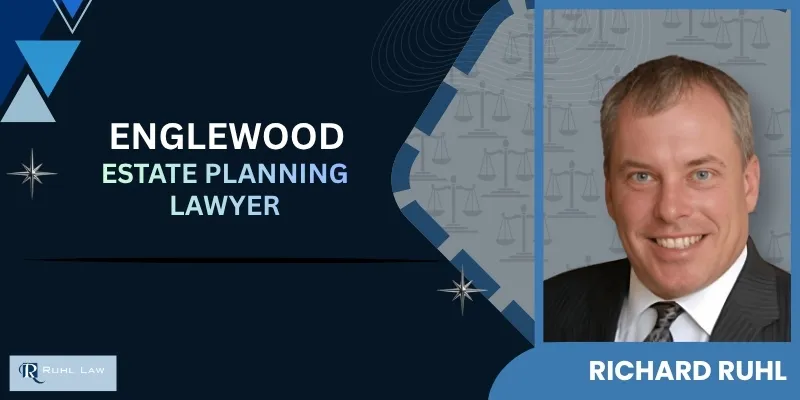
Richard Ruhl grew up in Englewood and has practiced in Southwest Florida since 2002. As an experienced Englewood estate planning attorney, he helps families prepare wills, trusts, powers of attorney, and advance directives. The firm also assists families who need guidance from an experienced Englewood probate lawyer after a loved one dies.
Your estate plan should explain who receives your property, who can manage your finances if you become incapacitated, and who may speak with your doctors. Families who want certain assets managed privately or transferred outside probate can also discuss their options with a knowledgeable Englewood trust attorney.
You should leave the planning process understanding what each document does, what it does not do, and how the documents work together. Call Ruhl Law, P.A. today to discuss your estate-planning needs.
| 24+ Years in Southwest Florida | Offices in Sarasota and Port Charlotte | English and Spanish Spoken | Sarasota and Charlotte County Courts |
Comprehensive Estate Planning Documents for Englewood Families
Every estate plan should begin with what you own, whom you want to protect, and who should act for you if you cannot make decisions. The documents included in your plan should address your actual circumstances rather than follow a generic checklist.
Your estate plan may include:
- Last will and testament: Names beneficiaries for probate property, nominates a personal representative, and allows parents to nominate a guardian for minor children.
- Revocable living trust: Holds properly transferred assets during your lifetime and provides instructions for managing and distributing those assets after your death.
- Durable power of attorney: Authorizes a trusted agent to handle designated financial and property matters on your behalf.
- Healthcare surrogate designation: Names someone to make healthcare decisions if you cannot make or communicate those decisions yourself.
- Living will: Records your instructions concerning life-prolonging procedures under qualifying medical circumstances.
- Homestead and asset-planning documents: Coordinate your plan with Florida homestead protections, ownership arrangements, and beneficiary designations.
- Trust and estate administration guidance: Helps a trustee or personal representative understand the responsibilities that arise after a death.
These documents must work together. An outdated beneficiary designation, an unfunded trust, or a deed that conflicts with the rest of the plan can produce a result that differs from what the estate-planning documents appear to say.
What Can Happen to Your Family Without an Estate Plan?
If you die without a valid will, Florida’s intestate succession law determines how probate property passes. A surviving spouse may receive the entire intestate estate in some circumstances, but the result can change when either spouse has descendants from another relationship.
An unmarried partner generally does not inherit under Florida’s intestate succession statutes merely because the couple lived together for many years. Stepchildren also do not ordinarily inherit as descendants unless they were legally adopted or another valid estate-planning arrangement provides for them.
If you become incapacitated without naming a healthcare surrogate, Florida law provides a priority list of people who may act as a healthcare proxy. That process may not select the person you would have chosen, and disagreements can complicate medical decisions. A court-appointed guardian may become necessary in some situations, but guardianship is not automatically required whenever someone lacks a healthcare surrogate.
A properly prepared plan allows you to choose the people who will manage your finances, address medical decisions, administer your estate or trust, and receive your property.
Why Englewood’s Two-County Location Matters
Englewood, Florida, extends across both Sarasota and Charlotte Counties. That county line can affect where a probate or guardianship matter is filed, but the answer generally depends on legal domicile and the nature of the proceeding—not simply which courthouse is closest to the property.
For a Florida resident, probate is generally opened in the county where the deceased person was legally domiciled. An Englewood resident domiciled in Sarasota County would generally have an estate administered there, while an Englewood resident domiciled in Charlotte County would generally have an estate administered in Charlotte County.
Sarasota County residents may use court facilities such as the South County Courthouse in Venice for services handled at that location. The clerk’s filing requirements and the assignment of a particular probate matter should be confirmed before documents are submitted.
Ruhl Law, P.A. works with families on both sides of Englewood and can identify the proper county before an estate, guardianship, or related proceeding is filed.
Choosing Between a Will and a Revocable Living Trust
A will and a revocable living trust perform different functions. Many Englewood families use both documents as parts of one coordinated plan.
A will provides instructions for probate property, nominates a personal representative, and can nominate a guardian for minor children. A will does not avoid probate merely because it clearly identifies the beneficiaries.
A revocable living trust holds assets transferred into the trust. Florida law establishes specific requirements for creating a valid trust, including capacity, intent, a trustee with duties, and an identifiable beneficiary or another legally permitted purpose. Those requirements are addressed in Florida Statutes § 736.0402.
A trust may help qualifying assets pass without probate, but only when those assets have been properly transferred to the trust or otherwise coordinated with it. A signed trust document does not automatically move a house, bank account, or business interest into the trust.
Some assets may already pass outside probate through joint ownership, beneficiary designations, payable-on-death instructions, or transfer-on-death arrangements. We examine how each asset is titled before recommending a will-based or trust-based plan.
How We Build an Estate Plan Around Your Family
Estate planning is not limited to choosing names for a will. The process should account for the people you want to protect, the property you own, and the decisions someone may need to make during your lifetime.
The planning process generally includes:
- Reviewing your family structure: We discuss spouses, children, stepchildren, unmarried partners, dependents, and anyone with special needs.
- Identifying your property: We review real estate, financial accounts, retirement benefits, insurance, business interests, and significant personal property.
- Checking ownership and beneficiaries: We determine how important assets are titled and whether existing beneficiary designations support your intended plan.
- Selecting decision-makers: You choose the people who may act as personal representative, trustee, financial agent, healthcare surrogate, or guardian nominee.
- Preparing coordinated documents: The will, trust, powers of attorney, healthcare documents, deeds, and beneficiary instructions should work together.
- Completing the required signing process: Each document must be signed and witnessed according to the rules that apply to that particular instrument.
- Reviewing the plan over time: Marriage, divorce, a new child, a death, relocation, a business transaction, or a significant property purchase may require an update.
FAQs About Englewood, FL Estate Planning Law
What is the difference between a will and a trust?
A will provides instructions for distributing probate property after death and may nominate a personal representative and guardian for minor children. A trust holds assets transferred to it and can provide instructions for managing those assets during incapacity and distributing them after death. Properly funded trust assets may avoid probate.
Do I need a trust if I do not own much property?
Not everyone needs a trust. The decision depends on the types of assets you own, how they are titled, your privacy concerns, your family structure, and how you want property managed or distributed. A coordinated will and beneficiary designations may be sufficient for some estates.
What happens to my home if I die without a will?
Florida’s intestate succession and homestead laws determine who may inherit the property. The outcome depends on your marital status, surviving descendants, how the property is titled, and whether it qualifies as protected homestead.
Does moving to Englewood affect my existing estate plan?
It can. Documents executed in another state may remain valid, but Florida has its own rules concerning homestead, spousal rights, trusts, powers of attorney, healthcare documents, and will execution. A Florida attorney can review the existing documents and identify provisions that should be updated.
Can you help Spanish-speaking family members understand the plan?
Yes. Ruhl Law, P.A. works with clients in English and Spanish so family members can better understand the documents, their responsibilities, and the decisions involved.
Can rebuilding or refinancing a home affect an estate plan?
Yes. A new deed, refinancing transaction, mortgage, insurance change, or transfer made during construction can affect how property is titled. If a home was removed from a trust or ownership changed, the estate plan should be reviewed to determine whether another transfer is appropriate.
What does an estate plan cost?
The cost depends on the documents required, the types of assets involved, and the complexity of the plan. Ruhl Law, P.A. can provide a clearer estimate after reviewing your needs during a free consultation and before you decide whether to proceed.
How long does it take to put an estate plan in place?
The timeline depends on the number and complexity of the documents, how quickly the necessary information is provided, and whether deeds or trust-funding work is required. The firm can provide a more specific timeline after reviewing your circumstances.
Start Protecting What You Built in Englewood
You do not need to know which documents you need before speaking with an attorney. Begin with a list of what you own, the people you want to protect, and the people you trust to make decisions if you cannot act.
Contact Ruhl Law, P.A. to schedule a free consultation with an Englewood estate planning lawyer. We can explain which documents may fit your circumstances and what is required to put them in place.
Serving Englewood and Southwest Florida
Ruhl Law, P.A. serves estate-planning clients throughout Englewood and the surrounding Sarasota and Charlotte County communities. The firm works with families in Port Charlotte, Punta Gorda, North Port, Sarasota, Venice, and nearby areas of Southwest Florida.
Englewood’s location across two counties makes it especially important to identify a client’s domicile, property ownership, and local court requirements. The firm helps families coordinate estate plans involving Florida homestead property, trusts, wills, advance directives, and powers of attorney.
Ruhl Law, P.A. maintains offices in Sarasota and Port Charlotte. The embedded map below shows the firm’s Port Charlotte office location rather than an office physically located in Englewood.
Ruhl Law, P.A. Port Charlotte Office Location
Get In Touch With Us
Fields Marked With An “ * ” Are Required
"*" indicates required fields
Available 24/7 Call (941)505-7845

© 2026 Ruhl Law, P.A. • All Rights Reserved.
Digital Marketing By 
*Images are obtained under license from Canva and other third-party stock image providers, with attribution included where required.