
- Call Us Today
- (941)505-7845
- Schedule Initial Consultation
Punta Gorda Estate Planning Lawyer
Dedicated Estate Planning Attorney in Punta Gorda, FL
What Florida Law Decides When You Do Not
Without a will, a durable power of attorney, and a health care surrogate designation, Florida statutes and the courts fill in decisions you could have made yourself. A trusted Punta Gorda estate planning lawyer can help you make those decisions in advance.
State law determines who inherits, a probate court oversees the estate, and relatives who disagree may need a judge to decide who can act for you.
An estate plan lets you make those decisions in advance. It names who receives your property, who handles your finances if you cannot, and who speaks for you on medical questions.
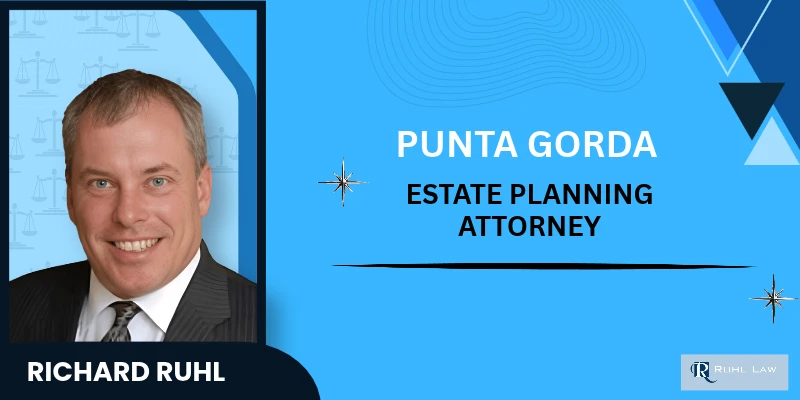
At Ruhl Law, P.A., we help Punta Gorda families put estate plans in place that fit their property and family circumstances. Attorney Richard Ruhl has practiced in Florida since his admission to the Florida Bar in 2002, and the firm has received a Martindale-Hubbell Client Champion award.
Contact us to find out which documents apply to your situation.
The Documents That Make Up an Estate Plan
A will is one piece of a plan. Different documents cover different periods of your life, and several take effect while you are still alive. We build a coordinated set so that each decision has a document behind it.
For many Charlotte County residents, an estate plan may include the following.
- Last will and testament. A will names who inherits your property and lets you nominate a personal representative to administer your estate.
- Revocable living trust. A trust can hold assets during your lifetime and direct how they pass after your death. Assets properly transferred into the trust can pass to beneficiaries without ordinary probate. A knowledgeable Punta Gorda trust attorney can explain whether this option fits your circumstances.
- Durable power of attorney. This document lets a person you choose handle the financial and legal matters you specify if you cannot manage them. The scope of that authority depends on the document’s terms and Florida law.
- Health care surrogate designation. You name someone you trust to make medical decisions when you cannot communicate or decide for yourself.
- Living will. This document records your preferences about life-prolonging procedures in the circumstances Florida law addresses.
- Designation of preneed guardian. You identify the person you would prefer as your guardian if a court later finds that guardianship is necessary.
Not every household needs every document. A homeowner with adult children, a married couple with children from earlier relationships, and an owner of several properties face different questions. We help identify which documents address your circumstances and which would add little.
What Happens Under Florida Law Without a Valid Will
Under Florida Statutes Section 732.101, property that a valid will does not cover passes to the decedent’s legal heirs under state inheritance rules. The result can differ from what the person would have chosen, especially when a surviving spouse and children from different relationships have competing interests.
The estate then has to be administered. Florida uses different probate procedures depending on the estate, and two common ones are summary administration and formal administration.
- Summary administration is a shorter procedure under Florida Statutes Section 735.201. It is generally available when the estate subject to administration, excluding exempt property, does not exceed $150,000, or when the decedent has been dead for more than two years.
- Formal administration is the fuller probate process, typically used for larger estates or those that do not qualify for summary administration. It involves court oversight and additional procedural requirements.
A will directs how your property is distributed, but it does not eliminate probate. A properly funded living trust may keep certain assets outside that process. A dedicated Punta Gorda probate attorney can explain which administration process may apply.
Probate addresses what happens after death. It gives no one authority to manage your finances or make health care decisions while you are alive but unable to act. Powers of attorney and health care surrogate designations cover that gap.
Planning for Incapacity Before a Court Has to Step In
An illness or injury that leaves you unable to act can leave bank accounts, bills, property, and medical choices without anyone clearly authorized to handle them. Without valid documents, relatives may disagree about who should act or may need to ask a court for authority.
A durable power of attorney can give your chosen agent authority over financial matters within the document’s scope, such as banking, paying bills, and managing property. A health care surrogate designation identifies who takes part in medical decisions when you cannot make them, and a living will records your preferences about life-prolonging treatment.
You need the legal capacity to understand and sign these documents, so they have to be in place before a medical emergency. Incapacity planning matters even when your estate is small and probate would be brief.
Local Experience for Punta Gorda and Charlotte County Estate Planning
Richard Ruhl grew up in Englewood, in Charlotte County. He trained under another attorney in Fort Lauderdale, returned to the area, opened his own practice, and joined Ruhl Law, P.A. in 2011. He is bilingual in English and Spanish, so clients can review estate planning documents in the language they are most comfortable with.
We can help you consider how your property should be handled, who should have authority to act for you, and what instructions your family may need in the future. When disagreements arise over a will, trust, or fiduciary’s conduct, a skilled Punta Gorda estate litigation lawyer can explain the available legal options.
FAQs About Estate Planning in Punta Gorda, FL
Can I create an estate plan without hiring an attorney?
Florida does not require an attorney to prepare a will, but the will must meet specific execution requirements, including signing in the presence of two witnesses who also sign it. Errors in signatures or witnessing can create problems when the will is submitted to probate. An attorney can also coordinate the will with your other planning documents.
What happens to my Florida home if I die without a will?
Florida’s homestead laws give qualifying property special protection. Depending on your family circumstances, the home may pass to a surviving spouse or descendants under constitutional and statutory rules. That does not mean every home avoids probate or passes to the person you expect, so reviewing ownership and family circumstances in advance can prevent unintended results.
Is a living trust better than a will?
Neither document is automatically better for every household. A will directs how property is distributed through estate administration, while a revocable living trust can hold assets during your lifetime and provide for their distribution after death. Trust assets must be properly transferred into the trust for the arrangement to work as intended. Some estate plans use both documents.
Can I revise my estate plan after signing it?
Yes. You can generally amend or replace your estate planning documents while you have the required legal capacity. Florida requires a codicil, which changes an existing will, to follow the same execution formalities as a will. Trust amendments and other documents have their own requirements, so we prepare changes carefully.
How much does estate planning cost in Punta Gorda?
Cost depends on the documents involved, the nature of your assets, and how much planning is required. A straightforward will with basic incapacity documents involves different work than a trust-based plan covering multiple properties or complex family arrangements. We discuss the expected scope and fees during an initial consultation.
Can the Charlotte County Clerk keep my original will?
Yes. The Charlotte County Clerk of Court accepts original wills for safekeeping, and you can also keep the original in a secure location. Whichever you choose, the people who will administer your estate need to know where the original is and how to reach it.
Where to Start
Most estate plans begin with an inventory of what you own, how it is titled, who depends on you, and who you trust to act for you. Those answers determine whether you need a basic will, a living trust, or documents that address incapacity.
Contact Ruhl Law, P.A. to schedule a free consultation with a Punta Gorda estate planning lawyer and find out which documents fit your property and family.
Serving Punta Gorda and Southwest Florida
Ruhl Law, P.A. serves estate-planning clients throughout Punta Gorda, Florida, and the surrounding Charlotte County communities. The firm assists individuals and families in Port Charlotte, North Port, Englewood, Sarasota, Venice, and other communities across Southwest Florida.
Estate plans for Punta Gorda families may involve Florida homestead property, retirement accounts, businesses, investment property, trusts, wills, advance directives, and powers of attorney. The firm helps clients coordinate these documents with the way their property is titled and the people they want to protect.
Ruhl Law, P.A. maintains offices in Port Charlotte and Sarasota. The map below displays the firm’s Port Charlotte office, which serves Punta Gorda and surrounding Charlotte County communities, rather than an office physically located in Punta Gorda.
Ruhl Law, P.A. Port Charlotte Office Location
Get In Touch With Us
Fields Marked With An “ * ” Are Required
"*" indicates required fields
Available 24/7 Call (941)505-7845

© 2026 Ruhl Law, P.A. • All Rights Reserved.
Digital Marketing By 
*Images are obtained under license from Canva and other third-party stock image providers, with attribution included where required.