
- Call Us Today
- (941)505-7845
- Schedule Initial Consultation
Englewood Personal Injury Lawyer
Dedicated Personal Injury Attorney in Englewood, FL
A serious injury can change your routine quickly. Medical bills may arrive before your first follow-up appointment, an insurance adjuster may call with an early settlement offer, and your income may stop while your body still needs time to heal. A dedicated Englewood personal injury lawyer can handle the legal work while you focus on your recovery. Learn more about the firm’s broader Florida legal services and practice areas.
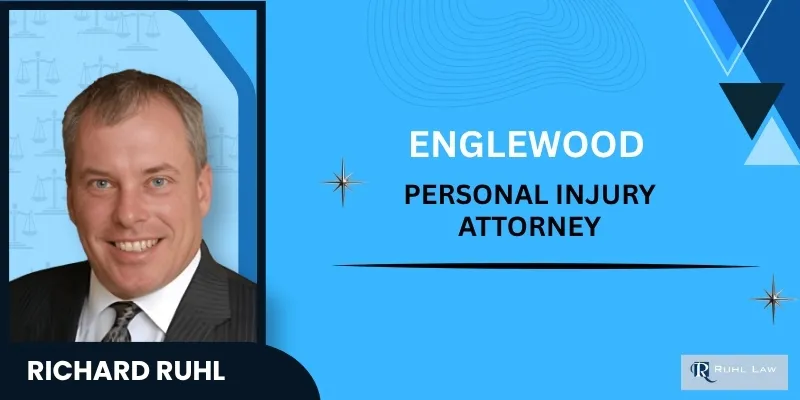
You need someone who can investigate what happened, review the insurance coverage, document your losses, and respond to settlement offers. An experienced Englewood personal injury attorney at Ruhl Law, P.A. brings more than two decades of Florida legal experience to that work.
Attorney Richard Ruhl has been licensed in Florida since 2002 and has represented parties on both sides of civil disputes. If your injuries resulted from a motor-vehicle collision, the firm can also evaluate your claim through its Englewood car accident representation.
Contact the firm to discuss what happened, what insurance may apply, and what legal options may be available.
| Licensed in Florida Since 2002 | Port Charlotte and Sarasota Offices | Free Consultations Available |
Experienced Guidance Through the Englewood Personal Injury Claims Process
Navigating a personal injury claim can feel overwhelming, but understanding each stage can make the process more manageable. The exact steps depend on the accident, the available insurance, the injuries involved, and whether the responsible parties dispute liability.
The claims process may include:
- Initial case evaluation: Review the accident, your injuries, available documents, insurance coverage, and potentially responsible parties.
- Investigation and evidence collection: Obtain police or incident reports, medical records, photographs, video, witness statements, insurance policies, and other relevant evidence.
- Insurance communication: Notify the appropriate carriers, respond to adjusters, review coverage positions, and help protect you from making avoidable statements.
- Medical and damages documentation: Collect evidence of medical expenses, lost income, property damage, physical limitations, and other accident-related losses.
- Demand and settlement negotiations: Present a documented settlement demand when the injuries and future needs can be evaluated responsibly.
- Litigation and trial preparation: File a lawsuit when appropriate, conduct discovery, work with experts, address motions, and prepare the case for mediation or trial.
Not every claim requires a lawsuit, but every claim should be prepared with the applicable deadline and the possibility of litigation in mind.
Personal Injury and Accident Cases We Handle in Englewood
Injury claims can arise from many forms of negligence. The evidence, insurance coverage, and legal requirements differ depending on how the injury occurred.
Ruhl Law, P.A. assists with matters involving:
- Car accidents: Collisions on roads such as State Road 776, County Road 775, and other routes through Englewood.
- Motorcycle accidents: Crashes involving visibility disputes, unsafe turns, roadway hazards, or negligent drivers.
- Boating accidents: Injuries on Lemon Bay, the Intracoastal Waterway, and nearby waterways.
- Slip-and-fall accidents: Injuries involving unsafe walkways, spills, inadequate lighting, defective stairs, or other property hazards.
- Dog bites: Claims involving injuries caused by a dog and the responsibilities imposed on its owner.
- Wrongful death: Civil claims brought after a fatal collision or another allegedly negligent act.
Each claim begins with identifying the responsible parties, preserving evidence, confirming the available insurance, and documenting the full effect of the injuries.
How Florida’s Injury Deadline Can Affect Your Claim
Under Florida Statutes § 95.11, an action founded on negligence generally must be filed within two years. The two-year period applies to negligence claims arising after the 2023 statutory change that took effect on March 24, 2023.
Not every injury claim follows the same deadline. Medical-malpractice cases have separate discovery and repose rules. Claims involving governmental entities can require advance notice and compliance with additional procedures. Wrongful-death, intentional-tort, and other claims may also involve different rules.
Waiting can create problems even before the filing deadline expires. Video can be overwritten, vehicles can be repaired, physical conditions can change, and witnesses can become harder to locate. Early investigation helps preserve evidence while it is still available.
How Florida’s Comparative-Fault Rule Affects Compensation
Florida uses a modified comparative-negligence system for most negligence actions. Under Florida Statutes § 768.81, a person found more than 50% at fault for their own harm generally cannot recover damages in a negligence action governed by that statute.
A person found 50% or less at fault may still recover, but the award is reduced by that person’s percentage of responsibility. For example, a claimant found 20% at fault would generally receive 80% of the recoverable damages.
The greater-than-50% bar does not apply to medical-negligence actions. Other exceptions and separate liability rules may also affect a particular case.
Insurance companies may dispute fault by relying on vehicle damage, witness statements, recorded interviews, surveillance footage, or alleged delays in medical treatment. The evidence should be reviewed before accepting an insurer’s proposed fault percentage.
Which Court May Hear an Englewood Injury Case?
Englewood, Florida, spans Charlotte and Sarasota Counties. The correct venue does not depend only on which side of Englewood the injured person calls home.
Under Florida Statutes § 47.011, a civil action may generally be filed where the defendant resides, where the cause of action accrued, or where property involved in the litigation is located. For a typical accident case, the location of the accident and the defendant’s residence are commonly relevant venue considerations.
A case properly filed in Charlotte County is handled within Florida’s Twentieth Judicial Circuit. The Charlotte County Justice Center is located in Punta Gorda.
A case properly filed in Sarasota County is handled within Florida’s Twelfth Judicial Circuit. Civil matters may be assigned according to that circuit’s procedures and the clerk’s filing requirements.
Venue, jurisdiction, the amount in controversy, and the identities of the defendants should be evaluated before filing. An accident occurring on one side of Englewood does not automatically mean that only that county can hear the case.
What Compensation May Be Available After an Injury?
The damages available depend on the nature of the claim, the severity of the injuries, the evidence of fault, applicable insurance, and whether Florida law imposes a threshold or another limitation.
Recoverable damages may include:
- Past and future medical expenses
- Lost wages and reduced earning capacity
- Property damage and related expenses
- Pain, suffering, and inconvenience
- Physical impairment or disfigurement
- Losses resulting from a wrongful death
Florida’s motor-vehicle insurance system can affect which benefits are available after a crash. Personal injury protection may cover a portion of qualifying medical expenses and lost income regardless of fault, subject to statutory and policy requirements.
Recovering noneconomic damages such as pain and suffering from an at-fault driver generally requires a motor-vehicle injury to satisfy Florida’s statutory threshold. Qualifying conditions can include significant and permanent loss of an important bodily function, permanent injury, significant and permanent scarring or disfigurement, or death.
FAQs About Englewood, FL Personal Injury Law
Does hiring an Englewood personal injury lawyer cost anything upfront?
Ruhl Law, P.A. offers a free consultation. Personal injury representation may be available through a written contingency-fee agreement, under which attorney fees depend on obtaining a recovery. The agreement should explain the percentage, litigation expenses, and how costs are handled if no recovery is obtained.
Does it matter whether my accident happened in Charlotte or Sarasota County?
Yes, but the accident location is not the only venue consideration. A lawsuit may generally be filed where a defendant resides or where the cause of action accrued. The parties, accident location, amount in controversy, and other jurisdictional facts determine the proper court.
What if the other driver did not have enough insurance?
Your own uninsured or underinsured motorist coverage may provide compensation when the responsible driver has no bodily-injury coverage or insufficient limits. Coverage depends on the policy, any written rejection or selection of lower limits, the vehicles and people insured, and other policy terms.
What compensation can I recover after an accident?
Depending on the facts, recoverable damages may include medical expenses, lost income, diminished earning capacity, property damage, and noneconomic harm such as pain and suffering. Motor-vehicle claims for noneconomic damages are subject to Florida’s injury-threshold requirements. The amount recoverable also depends on fault, causation, insurance coverage, and supporting evidence.
Start Your Free Consultation With an Englewood Personal Injury Lawyer
You should not have to manage an insurance claim alone while recovering from an injury. Ruhl Law, P.A. can investigate what happened, identify the available insurance, document your losses, and explain the options available under Florida law.
Contact Ruhl Law, P.A. to schedule a free consultation about your accident and possible personal injury claim.
Serving Englewood and Southwest Florida
Ruhl Law, P.A. serves personal injury clients throughout Englewood and the surrounding Charlotte and Sarasota County communities. The firm assists injured people in Port Charlotte, Punta Gorda, North Port, Sarasota, Venice, and other communities across Southwest Florida.
Cases may involve motor-vehicle collisions, motorcycle crashes, boating accidents, unsafe properties, dog bites, and fatal accidents. The applicable court and legal process depend on where the incident happened, where the defendants reside, and the circumstances of the claim.
Ruhl Law, P.A. maintains offices in Port Charlotte and Sarasota. The embedded map below displays the firm’s Port Charlotte office rather than an office physically located in Englewood.
Ruhl Law, P.A. Port Charlotte Office Location
Get In Touch With Us
Fields Marked With An “ * ” Are Required
"*" indicates required fields
Available 24/7 Call (941)505-7845

© 2026 Ruhl Law, P.A. • All Rights Reserved.
Digital Marketing By 
*Images are obtained under license from Canva and other third-party stock image providers, with attribution included where required.