
- Call Us Today
- (941)505-7845
- Schedule Initial Consultation
Englewood Trust Lawyer
Dedicated Trust Attorney in Englewood, FL
You have worked for years to build what you own—your home, savings, business, or even a boat you keep near Lemon Bay. A dedicated Englewood trust lawyer can help ensure those assets are managed and transferred according to your wishes. Families considering a trust can begin by speaking with an experienced Englewood estate planning attorney about how the document would fit into a complete estate plan.
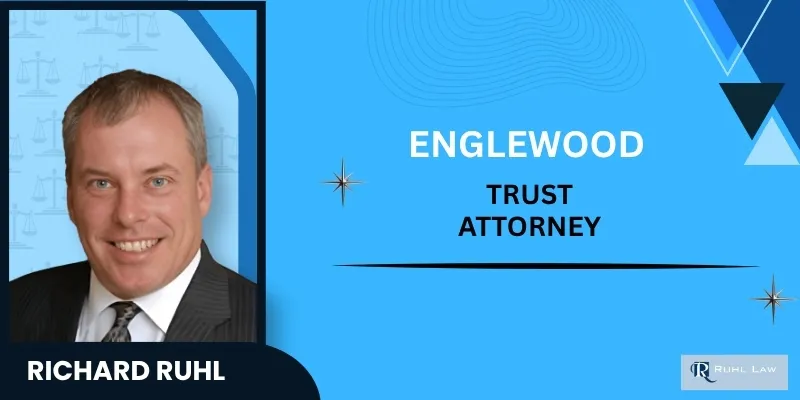
An experienced Englewood trust attorney at Ruhl Law, P.A. can prepare a trust based on your assets, beneficiaries, family structure, and long-term goals. Richard Ruhl has been licensed to practice law in Florida since 2002 and has spent more than two decades serving clients in Southwest Florida.
Whether you need a revocable living trust or planning for a family member with disabilities, the goal is to create documents that work when your family needs them. Proper trust funding may also reduce the property subject to probate, while an Englewood probate attorney serving local families can help if estate administration is still required.
A conversation now can help prevent your family from having to interpret incomplete instructions later. Contact the firm to discuss which trust-planning options may fit your circumstances.
| Licensed in Florida Since 2002 | Port Charlotte and Sarasota Offices | Free Consultations Available |
Comprehensive Trust Planning for Englewood Families
Every family’s circumstances are different, and the appropriate trust depends on what you own, whom you want to protect, and how you want the property managed. A trust should be selected and drafted for a particular purpose rather than treated as a one-size-fits-all form.
Trust matters we handle for Englewood clients include:
- Revocable living trusts: Trusts that can generally be amended or revoked during the person’s lifetime and may help properly transferred assets avoid probate.
- Irrevocable trusts: Trusts that may support tax, asset-management, creditor-protection, or long-term distribution goals depending on their terms and applicable law.
- Special needs trusts: Trusts designed to supplement care for a person with disabilities while helping preserve eligibility for certain needs-based government benefits when properly structured and administered.
- Trust funding and asset retitling: Transferring appropriate real estate, accounts, and other property into the trust or coordinating them with the trust through beneficiary designations.
- Trust administration: Helping successor trustees understand notice, information, accounting, management, and distribution responsibilities.
- Trust disputes and litigation: Addressing disagreements involving validity, interpretation, trustee conduct, accountings, distributions, or alleged breaches of fiduciary duty.
A trust is only effective for property governed by it. Signing the document without completing the appropriate funding and beneficiary-designation work may leave important assets outside the plan.
What Happens When a Trust Is Not Properly Funded?
Creating a trust and funding it are separate steps. The trust agreement establishes the arrangement, but assets must generally be transferred or otherwise coordinated with the trust before the trustee can control them.
Property left in an individual’s name without a valid beneficiary designation, survivorship arrangement, or other non-probate transfer mechanism may still require probate. A pour-over will can direct remaining probate property into the trust, but that property ordinarily must pass through probate before reaching the trustee.
A trust created and administered under the Florida Trust Code can allow a successor trustee to manage properly funded trust property after a death or qualifying incapacity. Unlike a will, a trust is not ordinarily filed as part of a routine probate case, although its terms or records may become relevant in litigation or other legal proceedings.
Beneficiaries may also have rights to notices, accountings, or other trust information depending on the trust’s terms, whether it is revocable or irrevocable, and whether the person who created it is still living.
How Trust Funding Works in Florida
The funding process depends on the type of property involved. A deed may be needed to transfer real estate. Bank or investment accounts may require new ownership documents, while life insurance and retirement accounts often require careful beneficiary-designation planning instead of a direct transfer.
Trust funding may involve:
- Preparing and recording an appropriate deed for Florida real estate
- Retitling eligible bank and non-retirement investment accounts
- Assigning certain business or personal-property interests
- Reviewing life insurance and retirement-account beneficiaries
- Coordinating payable-on-death and transfer-on-death designations
- Confirming how vehicles, boats, and other titled property should be handled
Not every asset should automatically be transferred into a trust. Retirement accounts, homestead property, business interests, and assets with existing transfer instructions require individual review because a transfer may affect taxes, creditor protections, financing, insurance, or beneficiary rights.
Why Englewood’s Two-County Location Can Matter
Englewood, Florida, extends across Charlotte and Sarasota Counties. The county line can affect where a judicial trust proceeding is filed, but the proper venue does not always depend solely on where the trust creator or trustee owns a home.
Under Florida Statutes § 736.0204, venue for a trust proceeding may be proper in a county permitted under Florida’s general venue rules, where a beneficiary involved in the case resides or maintains its principal place of business, or where the trust has its principal place of administration.
A trust proceeding properly filed in Charlotte County is handled within Florida’s Twentieth Judicial Circuit. The Charlotte County Justice Center is located in Punta Gorda.
A proceeding properly filed in Sarasota County is handled within Florida’s Twelfth Judicial Circuit. The Sarasota County Justice Center is located in Sarasota.
Richard Ruhl grew up in Englewood and has practiced in Southwest Florida since 2002. That local familiarity helps the firm evaluate the relevant county, court, and administrative requirements without assuming that every Englewood matter belongs in the same courthouse.
What Does a Successor Trustee Have to Do?
A successor trustee does more than distribute property. The trustee must follow the trust agreement, protect trust assets, keep appropriate records, provide required information, address expenses and potential claims, and treat beneficiaries according to the terms of the trust and applicable law.
A successor trustee’s work may include:
- Confirming authority: Review the trust and any required evidence of death, resignation, or incapacity.
- Identifying trust property: Determine which assets were actually transferred into the trust.
- Protecting the assets: Secure, insure, maintain, and value trust property.
- Reviewing obligations: Address expenses, taxes, creditor issues, and any amounts payable under the trust.
- Communicating with beneficiaries: Provide information or accountings when required.
- Making distributions: Follow the trust’s instructions concerning the timing and conditions of distributions.
- Completing administration: Maintain final records and close the trust administration when appropriate.
A trustee who distributes property prematurely, fails to keep records, favors one beneficiary improperly, or uses trust property for personal purposes may face objections or a breach-of-trust claim.
FAQs About Englewood, FL Trust Law
What is the difference between a revocable and an irrevocable trust?
A revocable trust can generally be amended or revoked by the person who created it while that person has the required capacity. An irrevocable trust is more difficult to modify or terminate, but changes may still be possible under the trust’s terms, through beneficiary consent, or through a court or nonjudicial process allowed by Florida law. The legal, tax, and creditor consequences depend on how the trust is structured.
How much does it cost to establish a trust in Florida?
The cost depends on the complexity of the plan, the type and number of trusts required, the assets involved, and the work necessary to fund the trust. A consultation can provide a more specific estimate after the attorney reviews your property and planning goals.
Can I change my trust after it is created?
A revocable trust can generally be amended or revoked while you have the required capacity, subject to the amendment method stated in the trust and Florida law. An irrevocable trust may sometimes be modified or terminated, but doing so can require beneficiary consent, trustee action, a statutory procedure, or court approval.
What happens to my trust if I become incapacitated?
A properly drafted trust can authorize a successor or co-trustee to manage trust property after incapacity is established under the procedure stated in the document. The trust may require medical evidence or another specific determination. Property that was never transferred into the trust may still require action under a power of attorney or, in some cases, a court proceeding.
Do I still need a will if I have a trust?
Most trust-based estate plans also include a pour-over will. The will can direct probate property remaining outside the trust into the trust after death. However, property controlled by the pour-over will generally must pass through probate before it can be transferred to the trustee.
Talk to an Englewood Trust Lawyer Before Life Changes
Waiting to prepare or fund a trust rarely makes the process easier. An incomplete trust may leave your family facing the probate proceeding or uncertainty that the plan was intended to prevent.
Contact Ruhl Law, P.A. to schedule a free consultation about creating, funding, administering, or reviewing a Florida trust. The firm serves clients in English and Spanish.
Serving Englewood and Southwest Florida
Ruhl Law, P.A. serves trust and estate-planning clients throughout Englewood and the surrounding Charlotte and Sarasota County communities. The firm assists families in Port Charlotte, Punta Gorda, North Port, Sarasota, Venice, and nearby areas of Southwest Florida.
Because Englewood extends across two counties, the proper venue for a trust dispute may depend on where the trust is administered, where the parties live, and other statutory venue rules. The firm works with trustees, beneficiaries, trust creators, and families connected to either county.
Ruhl Law, P.A. maintains offices in Port Charlotte and Sarasota. The embedded map below displays the firm’s Port Charlotte office rather than an office physically located in Englewood.
Ruhl Law, P.A. Port Charlotte Office Location
Get In Touch With Us
Fields Marked With An “ * ” Are Required
"*" indicates required fields
Available 24/7 Call (941)505-7845

© 2026 Ruhl Law, P.A. • All Rights Reserved.
Digital Marketing By 
*Images are obtained under license from Canva and other third-party stock image providers, with attribution included where required.